Tuesday, January 7, 2025

Let Them

Introduction- My Story

Small, Consistent Action Changes Everything

The problem with waiting is no one is coming to fix it
Thinking about your problems will never solve them
You do not need permission to take action (acting authentically) - Just Do It!
Only you can make it happen!

Changing Your Life is not Glamorous, It Is Grueling 
Take action even when you do not feel motivated to do so
Take action until it becomes a habit (Compound Effect)

Let Them Theory
Does not prevent judgement from others, guilt trips, passive comments and demands
It just allows you to let them have their thoughts, feelings and actions
You cannot control their thoughts, feelings and actions.

People have no real power over you unless you give it to them.

You reclaim your power (choice) by allowing them to have their experience whilst you focus and re-focus your energy on what brings you joy- You can control this!

Chapter 1- Stop Wasting Your Life on Things You Cannot Control
The problem isn't you. The problem is the power you unknowingly give to other people.

What is the Let Them Theory?
It will free you from the burden of trying to manage other people. Do not obsess over what other people think, say, or do, you finally have the energy to focus on your own life. 
  • You stop reacting and responding
  • You can take the space & time to draw up new boundaries for yourself & the other person
When you stop trying to control things that aren't yours to control, you stop wasting your energy.
You reclaim your time, peace of mind and focus.

The more you let people be who they are, or feel the way they feel, or think what they think, the better your relationship will be. The BEST gift you can give another person is the gift of their own experience.

There are things you can control, things you can influence and things that you cannot control. We assign meaning to events and experiences. The event and/or the experience has no meaning in itself - it just is. The Let Them Theory allows you to control the narrative.

Letting people have their own experience whilst focusing on your own experience allows you to soften up, lighten your grip on things and focus on what you would like to focus on - focus on yourself!

Chapter 2- Getting Started: Let Them + Let Me

Putting Theory Into Practice
Let Them is not about giving in. It is about releasing yourself from the control you never had in the first place. You cannot change what happened in a situation or experience. (Remember that the situation or experience on it's own has no meaning ONLY the meaning you assign it.) 

As a result, it is a choice to feel bad or victimized or wronged in/from a situation/experience. It has nothing to do with you and it is not personal (it is for your Growth!) Your attempts to control the situation/experience make it feel horrible.

By using Let Them you free up your energy. There is nothing to fix or do. Just Allow and Accept the situation/experience ==> Surrender to it. It is not personal unless you make it that way.

What We Are Really Trying to Control
We all try to control things from a very primal place- fear of being excluded or rejected is the #1 fear of humans. Being in control gives us the illusion of safety. When we are in control we protect ourselves from suffering- pain, disappointment, and rejection. And it is just that, an illusion.  

None of the "control" actually makes you feel better. In fact, the opposite effect occurs. Trying to control people and situations increases or amplifies your fears. You become more anxious and stressed.

  • Stoicism focuses on controlling your thoughts and actions (you are not your thoughts)
  • Buddhism (Radical Acceptance) teaches that suffering comes from resisting reality- the pain we feel stems from wishing things were different than they are.
  • Detachment Theory teaches how to emotionally distance ourselves from situations that trigger us (Let Them also practices emotional detachment)
    • Let Them creates a mental gap between your emotions and the situation allowing yourself to observe what is happening without being consumed by it. You remain clearheaded and in control of your actions.
    • Let Them frees yourself by releasing the grip you have on how things should go and allowing things to unfold the way they will go. 
    • You stop being ruled by your emotions and start living a more peaceful, intentional life!!!
    • Giving yourself the gift of processing and releasing your emotions related to the situation.
PAD Thoughts...
This is very similar to Michael Singer's Object Consciousness in concept in the Untethered Soul series of books. When we can have the awareness of level of consciousness to maintain object or witness consciousness during a triggering situation, we can process our feelings without being triggered in the moment and let the situation unwind naturally.  EASIER SAID THAN DONE MY FRIENDS...

The celebration comes in as you catch yourself being triggered and then watch it in so motion. I recently had this situation occur and it was like watching a version my past self in slow motion whilst being in the present moment. I still went down the rabbit hole, yet not as deeply as I would have before. I am celebrating myself for catching myself and removing myself from the situation before it got waaay out of control.

How This Works in Real Life - Balance
Mel starts talking about how negative emotions can tip the scale in the dynamic between you and someone else in a given situation when you let your emotions handle your reaction. The scale shifts when you start distancing yourself from the situation and look at the other side of the situation from another perspective or the other person's perspective.

PAD Thoughts...
In the moment, we tend to forget the other person's (what we perceive as displeasure or anger) is just for love or to be seen and heard. Each situation or event has two sides. Love/Anger, Support/Challenge, Empowerment/Disempowerment, Acceptance/Rejection...  and the list goes on.

Mel suggests by using Let Them, you allow things to play out and you can make a considered response, not reaction. You can even choose not to respond at all. Recently an old acquaintance whom I regularly text hit me with a wall of anger, saying I disrespected him by not responding to a text message. I could feel the anger is his words. I reviewed the text string, and I had responded to the question he had posed, just not giving him the answers he wanted to hear. I knew something was up from the venom in his words and several hours later responded when he was able to speak in a kinder tone, we could pick up the conversation. Another wall of venom immediately came back immediately. To that, I did not respond. That is a projection of his sadness in another area of his life that is not a dimension of our friendship. Let him have his experience and come through on the other side. I can still send love and direct my energy elsewhere in furtherance of my goals. My balance is restored.

Let Me is the Power Move
This is the balance- Let Them/Let Me to respond and get your power back by your own choice. It is my responsibility for what I do next. 
  • My Attitude
  • My Behavior
  • My Values
  • My Needs 
  • My Desires
  • What I do in response to the situation is MY CHOICE ~ THAT IS MY POWER!!!
Choose to:
ACCEPT
UNDERSTAND
BE COMPASSIONATE

in your response/actions. 

PAD Thoughts...
I also love how she suggests taking time for reflection. Taking this time leads to greater and deeper self-understanding. Take responsibility = the ability to respond for your next move!!!

Chapter 3- Life is Stressful

When you let the world around you impact your emotional state and peace of mind, you become a prisoner to these external forces or the environment. This is draining, influences lower energy level moods from a "control over" climate, you have less focus and can be more judgmental.

Epictetus- It's not what happens to you, it's how you react to it that matters

It is YOUR CHOICE on how to respond!!!

You give your PERSONAL POWER away when you don't make YOUR CHOICE. You are wasting time and energy on things that do not matter to you and out of your control. Don't get swept up in the emotion of the situation and react. Be an observer of the situation, witness consciousness, and respond.

Your Brain On Stress
Stress causes you to doubt yourself, procrastinate, burn out, doom scroll and struggle with comparison. Also, trouble focusing, constantly tired and over-thinking. 

Stress is a psychological state in your brain. The Pre-Frontal Cortex, PFC, is no longer in control and neither are you! The PFC is the logical center of the brain that assesses pros and cons to make a decision. Response versus Reaction.

Amygdala is where the "stress" response is located. The "reptilian brain" or the "survival brain," referred to as the state of fight, flight or freeze. You give your choice, your power away when you are in this state. Many, 7 out of 10, people live in the state of fight or flight consistently. The amygdala is constantly ON, and you are perpetually in survival mode.
  • Take a few deep breaths as it stimulates the Vegas Nerve 
  • Change your physiology - go out and take a walk for just 10 minutes
Let Them... 
Let Me- Empowers you to observe the situation and choose what you think, say and do (instead of letting emotions run the circus)
  • Intentional Response
In the CHOICE of your RESPONSE, YOU TAKE YOUR POWER BACK!!!

Chapter 4- Let Them Stress You Out- Frustration, Discouraged, Powerless ("Control Over"), Hostility, Demoralized, or Burnt Out


Let Me make a plan to reach my goals, celebrating each small win!  (Each small celebration fuels and motivates the next step with a hit of dopamine for the brain to continue.) 


Thursday, March 1, 2018

The Storm Before the Storm: The Beginning of the End of the Roman Republic by Mike Duncan

This book originally struck me as just another book on the history of Rome...  But it has been very enlightening to read.  It has cleared up some misconceptions I have had on the Gracchi brothers and their land reform ideas.  Previously I would cringe when I would come to the chapter on the Gracchi as a wingy-winey saga of martyrdom; whereas this book cast them and the theory of the beginning of the end of the Roman Republic starting with their saga.  This is very exciting as I have spent so much time studying the fall of the Roman Republic and want to know more...  Why?

I am going to write here about the idea presented in the beginning of the book, that is land reform.  I think it is one characteristic of the beginning of the end of the Republic; but yet quite important aspects, socio-economic if I have to pick one ;)  I know it's two...  (Remember in high school social studies when your teacher said everything in history has to be analyzed politically, economically and socially?  Well, he/she was right!)

Furthermore, this book makes the story of the Gracchi brothers much more realistic and interesting.  They might have been martyrs for the cause, but they tried to do something they believed would save the essence of the Republic.  [Later I would like to compare/contrast this with what Barry Strauss wrote in his book Caesar Must Die on Cassius and Brutus.  I see several parallels!]  So, let's go!

The Spanish wars were taking men away from the farms.  Much land went fallow as the farmers were away.  Other, richer, land owners bought up the land making large patron farms.  Then the boys would come home from their tour of Spain and find their land gone.  This increased the number of poor migrating into the cities.  Their livelihood gone.  [The book notes that this is before the standing armies/legions of Caesar and Augustus 100 or so years later.]  Also, the rich seemed to get richer from holding all the land.  This represented a situation which came to the notice of Tiberus Gracchus, the older of the two brothers.

Through his reforms he wanted to re-distribute the land to the poor or the original users of the land.  This did not go over too well with the aristocrats.  Though a series of events, not under his control, his reforms were not made.

add more detail from T & G life...  getting the Lex Agraria passed, or not
add more info on the conflict of the Italians and their rights

So the connection of this to the beginning of the end for the Republic or the initiation of the decline would be the greed and/or control of the aristocracy of the land and/or it's profits.  The idea that they could hold all the land without respect to the rest of the people (of a lower class/clients.)  I think this is telling, that the aristocracy was better than everyone else.  What gave them that grandiose idea?  Wealth and power, as the aristocracy had that.  Whereas the clients had none.  To be poor or unskilled at that time meant death or enslavement.  Neither seems too appealing.

Also, the usage of the institutions of the Republic.  The rights of all Italians.  The Social Wars did not occur until 91-88 BC.  Right now we are in the period of 146 - 120 BC.  Right now the institutions of the Republic were also slanted toward the aristocratic/patron Senators.  What about the plebs?  What about the people the Republic was supposed to represent.  One could argue they were representing them, but to their own benefit....

The connection to Caesar Must Die, Cassius and Brutus, to the Gracchi brothers is that influential older men were egging them on.  In the case of the Gracchi it was Tiberius's father-in-law, Appius Clodius Pulcher.  In the case of Brutus and Cassius,....  [fill in detail from Death of Caesar book....]

Tuesday, June 13, 2017

Causes of the Transition from Republic to Empire - The Growing Importance of the Generals

I have spent a lot of time studying the transition of Rome from Republic to Empire over the last few years.  Recently I have read Rubicon:  The Last Years of the Roman Republic by Tom Holland and The Death of Caesar by Barry Strauss.  Both books have strengthened my belief that the political, economic and social conditions were right for a change that were bread over the previous 100 years.

Let's start with the Political element.
In the 100 years before Caesar's assassination, the Republic was expanding.  Rome was constantly at war.  The political situation is tricky and volatile. 
  • Macedonian Wars (4) - ending around 150 BC
  • Battle of Cornith - 146 BC
  • Punic Wars (Carthage) - ending about 149 BC
  • Jugurthan War - ending around 112 BC
  • Social Wars (between Italian tribal groups) 91 - 88 BC
    • Sulla's First Civil War - Sulla marches troops into Rome for the first time - 88 BC
    • Sulla's Second Civil War + Dictator - 82 BC
  • Servile Wars (3) - Slave Wars - ending around 73 BC
  • Mithridic Wars (3) - ending around - 63 BC
  • Siege of Jerusalem (Pompey) - 63 BC
  • First Triumvariate (Caesar, Pompey, Crassus) - 59 BC 
  • Caesar Crosses the Rubicon - 49 BC - Troops entering Italian soil for a second time

What I call the Great Generals were on the scene (or on the march):  Marius and Cinna.  Both men were great leaders and led Rome to great victories and expanded boarders.  Victory meant more money pouring into the treasury of Rome.  Great prosperity, more slaves etc...  There were even internal struggles that Rome must deal with:  Social Wars (citizens in city states wanting the right to vote) and Servile Wars (Slave Wars, remember Spartacus?).

Early on there is in-fighting between Generals:  Marius and Cinna.   Both Marius and Cinna had large armies.  In the end, Marius, who was consul seven (7) times beat Cinna, only consul three (3) times.  Cinna's troops turned on him as he was preparing to meet Marius for battle for command of the Mithradic war/s.

Marius was a Populare, for the people.  There was much dissent between himself and the Optimates or the Patrician class.  Whereas, his enemy, Sulla, was an Optimate, or of Patrician class.  (I think think Sulla was a 'new man,' growing up poor; but moved up as a very successful general.)  Sulla served under Marius in the Jugarthine and Gallic Wars.  He was appointed Governor of Cilia and held other official positions which made him a Patrician.  There was a power struggle between the Populares and the Optimates.  (Caesar was a Populare too.  His aunt Julia was married to Marius.)

This leads me right into the Social element.
Many of these men were 'New Men,' or men that just made their fortunes.  Not from the old Roman families.  They had wealth, military victories and power.  Yes, Power!  Their troops were loyal too them and they got much bounty when they won their wars against foreign lands.

Friday, June 2, 2017

A Short History of the Vatican & Other Interesting Facts

This short history of the Vatican is from Mistress of the Vatican by Eleanor Herman and Basilica by R. A. Scotti.

A Really Short History of the Vatican-
Built on the circus where Caligula held his chariot races.  He put an obelisk in the middle of the circus that was 1200 years old.  Christians were martyred in the arena.  Nero smeared the early Christians with tar and used them as human torches.  Imagine the smell.

The Vatican was built in the form of the Roman Court of Justice, a rectangular building separated into 3 sections by two rows of columns.

The apostle Paul was killed in the second purge of the Christians, beheaded on his way to the port city of Ostia.  The apostle Peter was crucified upside down as he was an unworthy proxy for Christ.

Constantine built a church on the place where Peter was buried.  The Basilica of St. Peter's in 326 AD.

Other Fun Facts-
Pope Nicholas V brings the Papacy back to Rome from Avignon in 1447 and decides to rebuild St. Peter's Basilica built by Constantine in 326 AD with architect Bernardo Rosellino.  Rosellino worked with Brunelleschi in Florence. He also founded the Vatican Library.

Women in the Church- Christianity was practiced in the home, the realm of the women since it had to be practiced in private.  Many Christians were persecuted.  As a result, women played a role.  Clergy married until Pope Siricius denies the marriage of clergy in the late 300's.  (St. Peter was married.)  Married clergy would leave their land/income to their son's and/or use their income for dowries for their daughters and not giving the land/money to the church on their death.  Ecclesiastical Inheritance. But the marriage of clergy went unheeded until 1050's when Pope Leo IX enslaved clerical wives to clean churches and prepare meals.  Being a clerical wife became very unpopular.

But still many Cardinals and Pope's married.

Olympia Maidalchini - A Formidible Woman

Mistress of the Vatican:  The True Story of Olympia Maidalchini by Eleanor Herman was a book I stumbled on by chance.  I happened to be browsing some titles on Isabelle D' Este, there aren't many, when I came across this book.  It looked interesting.  No, Olympia wasn't the legendary Pope Joan, but who was she.  I started reading...  I couldn't put the book down.  By the end there was a lot, maybe too much about Pope Innocent X, Gianbattista Pamphili, but he was after all her ticket into the Vatican.


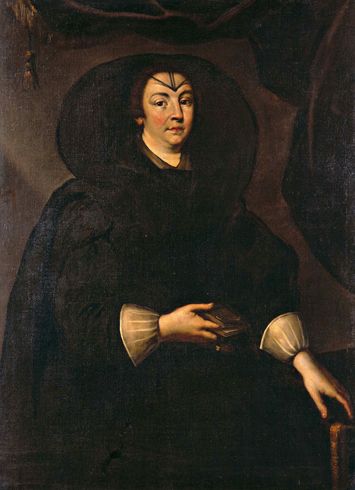
Donna olimpia maidalchini.jpg
Olympia Maidalchini Pamphili


Initially, Olympia's father wanted her to enter the convent.  She had no plans of doing that!  She out smarted a local priest her father got to talk her into going into the convent and then didn't have to enter it.  She was one smart young cookie.  She eventually marries Paolo Nini, the richest man in the town of Viterbro, Italy where she grew up. Sadly, Paolo dies young and leaves our lady with some money.  

Our young heiress, attracts a rich old noble who's family needed an infusion of money, Pamphilo Pamphili.  Olympia moves to Rome and marries him.  They are married for 22 years and have 3 children together.  Olympia has a brother-in-law that was a cannon lawyer, Gianbattista Pamphili.  Olympia and he become fast friends as Gianbattista likes to talk to and spend time with motherly ladies.  Were they having an affair?  The author suggests rumors going around Rome, but proves nothing either way.  Gainbattista had a reputation as a scholarly man and a good cannon lawyer, who was not easily corruptible.  A good reputation to have in Renaissance Italy.

Time passes and Gianbattista becomes the Papal Nuncio to Naples in the 1621 under Gregory XV.  He served there for 2 years and Olympia went with him to Naples.  (It took the papal courier 3 days to get from Naples to Rome.)  Gianbattista would send reports back to Rome weekly that were up to 15 pages long of the things occurring in Naples with regard to the Holy Roman Church.  Naples was controlled by Spain at this time.  Olympia's money was paramount in getting Gianbattista appointed as nuncio (keeping up appearances) and later made a cardinal.

Pope Innocent X
Gianbattista Pamphili, Innocent X
 Later under Urban VIII, Barbarini, Gianbattista was made Papal Nuncio in Spain.  This was a key position that represented an elevation in status for the Pamphili family.  At the time there was a farm/veg market in front of the town house and it was not in good repair for a family seeking to have a Cardinal-ship in the family.

In 1623, Maffeo Barbarini was elected Pope Urban VIII.  In 1626 Gianbattista was appointed Papal Nunzio to Spain under King Philip IV.  His loyalty to Spain was never questioned in future, even when he was made Pope.  1n 1629 Gianbattista was made a Cardinal.  In 1634 - 1638 Olympia enlarged the size of the town house on Plaza Novana that the Pamphili family called home, which is now the Brazilian Embassy.  Girolamo and Carlo Rinaldi were the architects to transform the palace to what we know today.

Brazilian Embassy Rome 04 2016 6533.jpg
Palazzo Pamphili
Gianbattista gets elected Pope Innocent X in 1644 - 1655.  Olympia ran the Vatican from behind the scenes for several years.  If you wanted to get something by Innocent, you had to get it before Olympia.  She was the first lady of Rome.  Gianbattista appoints Camillo, Olympia's son to be Cardinal Nephew.

This only lasted for 2 years until he married the Princess of Rossano, Olympia Alsobrandini, a rich widow of Paolo Borghese.  (Olympia wanted Camillo to marry Lucrezia Barbarini, but Camillo would not have it.  Camillo and his mother had a strained relationship.)  Olympia never really warmed up to her daughter-in-law.  Olympia's other children:  Maria and Costanza.  Maria marries Andrea Giustiniani and has her grand-daughter Olympiuccia.


Image result for princess rossano
Olympia Aldobrandini, Princess of Rossano

Olympia took on many causes during her time.  One was dowry-less girls.  In 1645, Olympia was made Princess of San Martino.  Here she built a town to help dowry-less girls (and ladies of the night who wanted to reform.)  It was here in San Martino, not far from Veterbro, that Bernini helped design a church and Olympia's tomb.  Today there are descendants of the original inhabitants living in the town.

Olympia also has the Fountain of the Four Rivers commission for the front of Plaza Novana.  Using the tumbled down obelisk brought back to Rome by Caligula from Egypt. The obelisk had been brought down by the Goths in 527 and sat by the San Sebastian Gate of Rome ever since.  Olympia commissioned Bernini to make a tremendous fountain to enrich the plaza.  The rivers represented were the Nile in Africa, Danube in Germany, Ganges in India and the Plate in South America.

Image result for fountain of the four rivers
Fountain of the Four Rivers


When Gianbattista was Innocent X was elected Pope, the Pamphili family took away all the honors from the Barbarini family.  There were many reasons for this, but chiefly the Vatican was in huge debt.  (Barbarini's supported France and Pamphili's supported Spain.)  The Barbarini family was exiled for 2 years to France.  Over time, Olympia's granddaughter, Olympiuccia, was forced to marry Maffeo Barbarini, age 22 in 1653.  By age 13 she was pregnant.  (Yuck!)  She was forced to do this to unite the two families.

2dhbas2
Olympia Giustiniani Barbarini

Olympia is exiled from Rome to San Martino in 1650 for 2 years.  She had been selling papal offices, managing the papal accounts and adding money, position to the Pamphili family.  Innocent decides to take over and manage things on his own with his Cardinal friends.  Eventually, Olympia comes back to Rome, but in a reduced capacity.

She dies of plague in 1657 in San Martino.  She created a dynasty and ran the papacy from the side lines for a while.  A formidable woman!


Friday, March 4, 2016

Jefferson and the Tripoli Pirates by Brian Kilmead

Read this book if you like swash buckling action and some lesser know post-Revolution American history.  I love to read about Jefferson, but this book dwells on the great man only briefly.  The main characters are the sea captains and the prisoners and the rulers who made Algeria, Tunis and Morroco what they were in the late 1700's early 1800's.

The book opens with the Capture of the Dauphin in 1785 who was taken prisoner for 10 years.  The Maria was also captured too.  Most of the Americans were taken prisoner and made to be Christian slaves.  They could die of tropical diseases, work as slaves (many of the enlisted preformed hard labor, versus the officers that helped the ruling class out) or convert to Islam.  Islamic people could not have other Islamic people as slaves.

The other interesting/scary factor was the amount of time it took for news to travel in the late 1700s.   It could be up to 1 year for news to travel back (and forth) to the Executive branch of the government, the United States.  Wow.  Not like today's instant coffee world of the internet!


Peter Lisle --> Murat Rais
Philadelphia 300 people...  taken prisoner
Bainbridge captained the ship

Wednesday, August 5, 2015

The Reluctant Matador by Pryor - Put Down or Finish?

The Reluctant Matador by Mark Pryor is beyond formulaic.  I'm 3/4 of the way into the book and do I  put the book down or finish it.  There is a slight pulse, but that is all.  Can't wait to start the next book.  Camilleri!

Monday, April 6, 2015

Ghost on the Throne by Romm - I Did Not Like How This One Ended

Ghost on the Throne by James Romm was not an easy book to read.  I have been reading it since the holidays and just finished it.  I thought this book would go more into Ptolemy and the connection to Alexandria.  The book just superficially touched upon the subject matter.  (That is why I picked this one up in the first place.  Cmon, Egypt is a big deal and Ptolemy really had a good thing going.)  This book was more into the wars of succession between Peithon, Antipater and then Antigonus One Eye, Cassander and Eumenes.  I must say that history is way better then TV as I did not like how it ended.  If I were the author, I would have made Olympius the victor, not Cassander.  Really???  Hollywood will back me up.  But all kidding aside, this is a really good book.  It breaks the events down into morsel sized bites so the reader can understand what is going on.

The book spans the time of Alexander's death in 323 BC to 316 BC.  You are introduced to characters that you did not know just by reading Alexander's biography.  Papers could be written on them all.  Things that caught my attention:

Olympias and Philip II role in Alexander (The Great's) Life -
1. Further reading on Philip II is required.

  • Unified Greece during 23 year reign
  • Made first constitution
  • Established a monarchy - Empire for his son to inherit
  • Military advancements - many successful battles to enlarge empire's boundaries & military advancements

2. Olympias - A very strong female role model!  Girls take heed, nothing is too small for you to accomplish!
  • Born a Molossian [Greek] Princess named Polyxena in Epirus (southern Albania today)
    • Descended from Trojan war heros
    • Ritualistic and tribal society
  • Philip II 5th bride
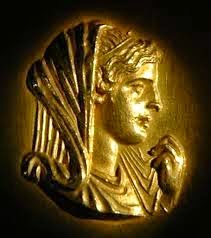
Olympias

Angelina Jolie as Olympias 

p284 - "Greek writers loved to contemplate women who resembled tragic heroines, and in Olympias they found all the parallels they could ask for.  Born a neo-Trojan princess named Polyxena, she seemed to them to have lived her whole life in mythic roles.  As Philip's wife, she had morphed into Medea, murderess of the princess who stole her Husband's affections; as mother of the dead Alexander, she resembled Hecuba grieving for the fallen Hector.  As ruler of Macedonia,  she evoked Clytemnestra, the iron-fisted queen of Argos, as well as Antigone, but an Antigone in reverse, driven by her passionate devotion to kin and unbury the dead.  Whichever of these roles we cast her in, Olympias is undeniably a tragic figure."

p309 - "Olympias died at age 56 or 57.  She had exercised more power than any woman in Europe up to her time, with the possible exception of her rival and victim Adea."

What happens in between is after Alexander's death, Olympias and her daughter Cleopatra flee Alexandra to Epirus.  Olympias tries to get Cleopatra to marry one of Alexander's Companion generals, but that falls through.  She then takes over as regent for her grandson, Alexander (Rhoxane's son) and allies with Polyperchon.

In the end, she makes a fierce stand, but was not able to withstand the siege put on by Cassander.  Her royal party is starved out and she is finally taken prisoner by Cassander run through with a sword by his men.  But the life and the example she led up to that point were phenomenal.  Almost like Terentia, Cicero's wife, but wielding more power.  [The book says Adea also had power, married to Alexander's half-brother, but it evident that Olympias wielded equal power for a much longer period of time.]

What influence did this have over Alexander?  What influence did both parents have over Alexander?  Those are some pretty big shoes to fill.

Which leads me to the next question which popped onto my radar this morning.  Olympias's, Philip II and most of all,Alexander's life was quite extraordinary.

  • What makes a extraordinary life? 
  • Could our lives be considered extraordinary on a smaller scale?
  • Or must accomplishments be grand and stand the test of time for this to be true?
I must think about this one!  More later/P

Monday, March 23, 2015

The Rosie Project, The Storied Life of AJ Fikry and The Signature of All Things...

I have been on a fictional tare recently to keep up with the lovely ladies in my CV book group.  The titles they did not read were The Storied Life of AJ Fikry by Gabrielle Zevin and The Signature of All Things by Elizabeth Gilbert.  The only book I would recommend would be The Rosie Project by Graeme Simsion, the book they did read.
--------------------------------------------------------------------------------------------------------------------------

The Rosie Project was a cute, non-conventional love story.  How love can change us?  Or just a cute work of fiction set in Australia.  There really isn't much meat to talk about, but if you are headed to the beach for spring break, pick it up!  The lead character, Don, is a high functioning autistic man.  He is a professor at university teaching genetics and decides to help Rosie find her biological dad and falls in love with her.

There is a follow up book called The Rosie Effect.
--------------------------------------------------------------------------------------------------------------------------

I'm not crazy about The Storied Life of AJ Fikry.  It came up as a reco when I purchased The Rosie Project.  Should have known?  But at least I got it from the library.  Again, this book is the story of AJ Fikry's twisty-turney life.  There is a love story, but it ends suddenly.

The best part of this book is the relationship with his daughter.  The wonderful way Zevin has AJ raise his daughter on the island book store.  Therein lies the magic.
--------------------------------------------------------------------------------------------------------------------------

The Signature of All Things by Elizabeth Gilbert of Eat Pray Love fame was a real plot mess.  Why?  Ms. Gilbert is a terrific writer.  The writing is excellent, absorbing; but the plot is weird.  Say no more.  And then the book ends!  Everyone dies and the book just ends (one would believe as Alma does.)  I get what she is trying to do, but it is unsatisfying.

There is a discussion in Chapter 15 on the title's meaning, the signature of all things and how god has left his mark on the world.  You can see God hand in the world and people must come to see and realize this.  After Chapter 15 there is a continued discussion, in Chapter 31, of self-sacrifice and altruism.  Alma uses the example of her sister Prudence who gave up her true love, George and Prudence's devotion to the abolitionist cause.  Alma recognizes this after her father expires and leaves the estate to her sister.  Alma also realizes her father truly loved her as he left everything to her.  One of this one is worth two of the other (referring to Prudence.)  But we really don't get to the explanation of why Alma/Gilbert introduces altruism & self-sacrifice into the evolutionary mix.  Furthermore, Gilbert continues to state, via the characters evolution cannot take into account human consciousness.

It is in the discussion of the signature of all things that this book distinguishes itself.  The addition of the self-sacrifice and human altruism to the equation make the conversation more interesting, with the further complication of human consciousness.  Gilbert, by way of Alma, also states the purpose of life is the attainment of knowledge.  Alma figures this out before expiring.  One also hopes Alma got all her questions answered in that last moment and is happily communing with her also departed husband.

Sadly, I do not think the average reader is going to pick up on this line of inquiry in this book as it more going to the heart of historical romance set in Philadelphia and Tahiti.  It is too bad as Ms. Gilbert could have taken this line of inquiry onto something bigger in the book notes.

The reason I hooked on to this discussion topic is a conversation I had with a friend on the knowledge and/or quantification of God.  Humans used their consciousness to know there was a higher power in the universe and then with the invention of science tried to become closer to him.  But there is no way to quantify God.


Thursday, December 4, 2014

Popular by Maya Van Wagenen - MUST READ!!!

Guys -
I'm late for work, but I must urge ALL of you ladies to pick up this book.  It's YA, but oh so wonderful.  Popular outlines what we all went through in Junior High and High School and Ms. Van Wagenen is so very funny. 

P108-
"Whenever we come here [beach on MX side of TX border] we play a very special game in the car.  It's called, "What Not to Say When Asked 'Are you a US Citizen?"

Here are our top five answers that would most likely get you taken away in handcuffs.
  • Que?
  • I plead the Fifty
  • Is there a right answer?
  • The question is, are you?
AND...
  • I am, but I'm not sure about the two kids in the trunk."
It is the story of how Maya Van Wagenen uses Betty Cornell's Teenage Popularity Guide written in the 1950s to make herself popular right now.  The story is funny and touching at the same time.  It will make you laugh and remember what it was like.  Get it from the library ASAP!

Maya starts wearing a pearl necklace per Betty's direction.  She is convinced with all her changes she is still unpopular, but when she sees a "semi-popular Choir Geek... wearing a string of pearls around her neck.  A glimmer of hope in a dark and unpopular world [opens up to her.]"

I think that glimmer is what makes us all go on.  Day by day, no matter how old or what the circumstance.  Again.  This book will make you smile and laugh.  Read it!

Best/PD

Tuesday, November 18, 2014

Venice - A New History by Thomas F. Madden

I just started reading this book, but it is really good.  Easily readable.  So, let's get started!

Introduction:  Venice founded in March 25, 421 and 452 after Atilla the Hun over-ran the city.  Western Roman Empire, WRE (economy) in decline.  Eastern Roman Empire, ERE still going strong (until 700s.)  And here comes Veneto onto the scene.  Roman rulers ruled from Ravenna, near by.  Roman Empire divided into two halves by Diocletian in late third century.  Constantine I, first Christian Emperor, founds Constantinople (Istanbul) in 330 AD; capital of ERE. Romulus Augustus, 476 AD, last Roman Emperor in the WRE; conquered by Odoacer, a Gothic war lord.  488 Theodoric wanted to overthrow Odoacer.  493 Theodoric captures Ravenna and co-rule with Odoacer, but then assassinates him during a banquet to celebrate.

Chapter 1:  Refugees on the Lagoon:  The Origins of Venice
The lagoons were created from the run off from the Alps, sediment.
Sediment caused banks to be formed. Lidi or islands near the Adriatic.  Canals were present.
Fun Fact:  Ravenna was a port at this time and now it is inland due to the growth of the coast line due to sedimentation.
Main road between WRE and ERE was the Via Postumia, which went through this region.
Culturally, Veneto was a mix of Roman, Greek and Leventine elements
- Gothic Invasion - Rome sacked 410 AD
Foundation Stories:  Padua sent 3 consuls to an island group to Rivoalto or "high bank", today's Rialto. And there was a winding canal, Grand Canal, to establish a trading post.  (Trade is the foundation of the Venetian economy.)

Venice gets rich from salt trade. Up until medieval & Renaissance times. The Salt Office was an important office.


Monday, November 3, 2014

The Etruscans by Barker and Rasmussen - Dry But Good

After reading several books on Tuscany and Chianti, I took this book with me on my journey to India.  Go to India, read about pre-Roman Italy or the Etruscans.  Makes perfect sense!  For me anyway.

The book is good, but dry.  I am enjoying it.  It took me a while to get into, but once I did, I don't want to put it down.  The book goes into the history of the Italian peninsula on a grand scale, starting 50,000 years ago.  We quickly move into the Etruscans.  The book suggests the parallels to the Greek culture, no secret there and goes into great detail on the political, economic and social aspects  the two groups.  Furthermore, there is a reoccurring theme of archaeology versus histories.  [Polybus, Livy, Pliny and Tacitus, written from 2nd century BC to 2nd century AD.]

The Greeks and Phoenicians established colonies in Italy in 700 BC.  The Phoenicians established themselves in and traded with:
  • North Coast of Africa
  • Western Sicily
  • Sardinia
  • Southern Spain
Whereas, Greeks established themselves in and traded with:
  • Southern Italy
  • Eastern Sicily
  • Corsica
  • Southern France 
  • Eastern Spain
"In Italy the first Greek colony was established from the island of Euboea at Pithekoussai (or Pithacusa) on the island of Ischia in the Bay of Naples in 750 BC." p75 There was another colony of Greeks near Naples in 700 BC.  These were all established as Greece was growing stronger as trading power [economy] and needed room to grow/trade.  This again goes to my theory that southern Italy was initially Greek and hence the love of anything Greek.  These people mingled with the locals and became the Latins.

There are several theories as to where the Etruscans came from.  I am going to go with the migration down over the Alps, from the northern part of Europe or indigenous people's locally who banded together over time.

Map of Etruria and it's People
Three major structural features of the Landscape are the Apennines, Pre-Apennines and Anti-Apennines are limestone hills running the length of central Italy.  The eastern boundary is today's Autostrada between Florence and Rome.  Over time, the Etruscans developed hill top villages as defensible locations to other groups.  These groups were initial subsistence farmers growing cereal and grains to live.  But over time started growing olives and grapes (for wine) additionally.  They kept animals to feed themselves and for secondary products.  Economically, the biggest reason for growth was the mineral resources available in the Tuscan/Chanti region.  This spurred development of industry and trade.

As time progressed and the Villanovan Age occurs, a fuedal-like, Chiefdom systems evolve.  Over time, a prestige/ranking system develops, that is very elaborate in the Villanovan Era.  Burial rituals are high lighted.  Going from burial to cremation and ornate rituals.

Ages and Dates as Related to the Etruscans
Much of what historians know come from the tombs of the Etruscans.  Like the information on ranking on the various implements and ornaments buried with the cremated remains of the people.  There are more male graves then female, but the female graves exist non the less.

Women enjoyed much freedom.  Some were educated and could read.  Hair styles were Greek inspired.  They wore the forerunner of a toga.  There were brooches or fibulas to hold mantles or tunics together.  There was much ornamentation in the jewelry.  The text does not state if women could own land as their Greek and later Roman counterparts could.  (The information starts around p. 108 in the text.)

Alphabet - Again based on the Greek.  There is a lively discussion about the change of the alphabet over time and how that helps designate Norhtern Etruscans from Southern Etruscans.  (page 87-89)

Etruscan Alphabet
Ok- This is a summary of the first 1/3 of the book/PD- Pick up with Chapter 4.

I'm back, but quickly...  Lots more to say about this, but it's been a rough weekend - Cmon the Eagles even lost :(

Romaninization meant putting up walls, to keep the Romans out!  Many of the cities in Eutria were not fortified until the Roman expansion:  Roman Civil War, [Marius-lost] and Sulla's-won terror's [to those who opposed him] were cited.  (But it really occurred earlier in the 2nd century BC when the Romans conquered Veii(396 BC), Volsinii (264 BC) and Falerii (241 BC).)  The farms dried up at the same time.  The book states 80% of the farms dried up in Falerii and 33% of the farms near Veii. Certain areas south of Rome did thrive though, along the trade/market routes (to Rome.)   The book mentions some cities remained relatively untouched by the Roman invaders:  Tarquinia.  This could be because it was heavily involved in the trade routes?

What fascinates me is the evolution of the polis or the cities along the trade route and the fact the book mentions some of the farm areas that were abandoned during the Romanization period, were reclaimed during the middle ages.  This leads the reader to believe, the Etruscans were a peaceful, or atleast more so, than the Romans.  And it is fair to say, their independence and cultural development ended in the 2nd century BC after being swallowed up by the Romans.

Also, characteristic to Romanization, wealthy Etruscan families were offered Roman citizenship.  In 89 BC, after the Civil War, the Etruscans were given citizenship and taken into the Roman tribes.  Several wealthy families (farming) even made the transition to the Roman Villa life style.  The Etruscan farms were in their hey day in the 2nd cent BC and some went into the Republic and Early Empire.

Note:  Veii is 15 km from Rome, in other words, very close.  Conquered by Rome in 396 BC.

Reference:  In the Name of Rome by Goldsworthy & From Gracchi to Nero by Schullard.
I NEED MORE TIME TO READ  :-)

Update:  I just got Etruscan Civilization by Sybille Haynes in the mail!!  Such a cool and more comprehensive book.  I can add sections to this entry based on this book.  Stay tuned.  And the pictures are wonderful :)

Roman Roads:  All Roads lead to Rome!  But they were first Etruscan Roads used for trade between cities.  The first Roman Road cited by the book is Via Amerina, layed out after the destruction of Falerii in 241 BC.  Followed by Via Flaminia, 220 BC and Via Aurelia in the 2nd or 1st cent BC all used to move Roman troops around for the great expansion of the Republic.  Diverticula - side roads - I found this funny, I don't know why...

Etruscan Influences on Roman Life
1. fasces - folding chair
2. Etruscan Alphabet - Latin alphabet was derived from Greek.  (Latin official language of Rome.)
3. Etruscan Mantle - Roman Toga
4. Etruscan Burial Ash Urns - Roman burial & Imperial Sarcophagus with mythological embellishment
5. Public Sporting Events
6. Arch - Falerii cited
7. Aqueducts & rudimentary drainage systems

Saturday, October 25, 2014

Seven Seasons in Sienna by Robert Rodi - Nice!

Seven Seasons in Sienna:  My Qixotic Quest for Acceptance Among Tuscany's Prodest People by Robert Rodi is another good book to read in line with Too Much Tuscan Sun.  Rodi was a co-writer or assisted Dario Castagno in the writing of his book(s).  Rodi story is less short stories and more narrative of his many visits to Sienna and his desire to be apart of the contrada.  Specifically the Caterpillar contrada, that Castagno is a member.  Rodi and Castagno are obvious friends.  (Personal Observation:  Friends or a friendship that can stand time and distance is a wonderful thing.  I think of that as I read the book and some of the narratives within.)

Sienna, Piazza del Campo - Lovely Medieval City

I am enjoying Rodi's writing style and can see echoes of it in Castagno's books.  (I have just ordered several more and cannot wait to receive and start reading them.  I just gave my copy of Too Much Tuscan Sun to someone to read.)  There is also a long standing Rivalry between Florence and Sienna where Sienna lost in 1555, when this book alleges "Florence put Sienna under oppressive rule and cut them off from outside influence.' [p. 9] This makes the Siennese a proud people, not too crazy about the Florentines.  These books are upbeat and fully of history, this one specifically on the palio.

Palio Facts - https://www.youtube.com/watch?v=3_yGZhZItVo [link to video of the palio]


Piazza del Campo transformed into a racetrack for the palio
  • Two Palio each year to celebrate the Madonna
    • July 2 - Madonna of Prvenzano [p.43]
    • August 16 - Feast of the Assumption [p. 43]
    • Only 10/17 race in each palio as there isn't enough room for all of them to run
    • "Two lottery drums, one containing the names of the ten racing contrade, the other names of the ten horses." [p. 39]  It's all put together by chance.
    • The remaining 3 contrade are randomly selected to run
    • The race is run in the Piazza del Campo (center of town) and is shell shaped, meaning prosperity in the middle ages.  Palazzo Publico and Torre del Mangia are the main buildings in the Piazza.
    • Piazza del Campo is turned into a race track over night as dirt is put down by dump truck for the horses to race on.
    • The horses take 3 turns around the race track.  (The sharp turn in the video is the Curva di San Martino.)  In the past many horses have wiped out there.  Horses can cross the finish line and win without the jokey on back.
  • Horses 
    • After running in the palio, the horses are entitled to retire to a pensionario where they can run free and are well cared for
    • Average life span of a palio horse is 28 years
    • Only half breed horses are selected between the ages of seven and ten years
    • There are protocols to prevent accidents
    • Sienna works with animal rights groups to ensure the excellent treatment of the horses
    • The same cannot be said of the jokey's - they are either loved or hated... 
  • Contrada - city quarter - there are 17 in Sienna; where as there are 3 sections of the city
    • 17 Quarters - Eagle, Snail, Owl, Dragon, Giraffe, Porcupine, She-Wolf, Seashell, Goose, Caterpillar, Wave, Panther, Forest, Tortoise, Unicorn, Tower and Ram
    • 3 Districts - Terzo di Camollia, Terzo di Citta and Terzo di San Martino [p. 43]
    • There are rivalries between certain contradas
    • Certain contrada were at one time made up of the tradesmen in the quarter
    • Today membership in the contrada is based on the quarter of the city you are born in.  Families can be split among several contradas.  Therefore, according to D. Castagno, contradas are another type of family.
    • Members work their way up the ranks of the contrada from KP to leadership positions
  • Drappellone, painted banner given to the winner of the palio
    • Designed by various artist from Sienna and elsewhere
  • Fazzoletto - scarf tied around the neck of the member of the contrada to designate which contrada they are a member of.  eg. Caterpillar colors are blue, gold and green
Symbol of the Caterpillar Contrada

More on the book...
There is one chapter in Summer 2009 - The Debutantes - Out of Pocket, where Rodi looses his wallet in the airport at Pisa and then looses his luggage in a cab he cannot pay for.  Travel Nightmare 101!  He has friends that help and support him.  A great thing in life.

Another chapter in the same section A lot of Chianti, A Little Rose (this one sprung me out of bed at 6 am to write this entry) has a quote that got to me.  Context:  Rodi is at the Caterpillar contrada and meets Peggy Castaldi, an American from San Francisco who lives part-time in Sienna.  She is a member of the contrada.  "She is bright and funny...  and seems to mesh seamlessly with the natives.  I ask her what her secret is, and she looks at me oddly. "Just being here," she says, as if obviously that's all it takes; and I can see that it might be all it takes her.  Some people are like open windows; there no artifice, no expectation, no apprehension in them - they joyfully embrace any new experience. [Of the Author] I'm not an open window, not even a shuttered one.  I feel more like the trap door to the cellar with the padlock that is rusted shut.  Got to get a crowbar and pry that baby open."  [p. 98]

Wow, that made me think.  First, "joyfully embracing any new experience," does that indicate a certain naivete in Peggy or does it indicate a strong woman who can take what comes into her path.  Is it a combination of both?  (I haven't met her, but I will go with a combination of the two the latter being the stronger characteristic.)  Secondly, can you vacillate between the two extremes?  Would that be bi-polar or just plain old humanity?  (I'm again hoping for the latter.)  Openness is a quality that many Americans lack.  We are hooked into buy me, take me, give me at the mall; whereas many Europeans value slowing down and enjoying life.  We rush, rush, rush as we accumulate our many possessions and bucket lists.  Can you see where I'm going with this?  Maybe it's just me and where I'm at now, but it really hit me hard.  Be strong, enjoy life.  Work hard, play hard and enjoy your family while you can.

I also really like the word quixotic in the title.  The word means exceeding idealistic, unrealistic and impractical.  But as Rodi writes, you feel his goal is ever more in reach.  Could he become a member of the Caterpillar contrada by the end of the book?  I hope so, just like Roy Moskovitz (of Too Much Tuscan Sun.)

Listening to Bach Concerto for Harpsicord No. 1 in D Minor (https://www.youtube.com/watch?v=CjSD12OQbFA) as I write, but only half way through, more later/PD
_________________________________________________________________________________
Pictures from Recent Trip to Sienna


Armor from Caterpillar Contrada

Caterpillar

Caterpillar Contrada Museum

Inside Catarpillar Contrada Museum

Catarpillar Contrada Museum

Catarpillar Contrada Museum

Winning Palio Banners


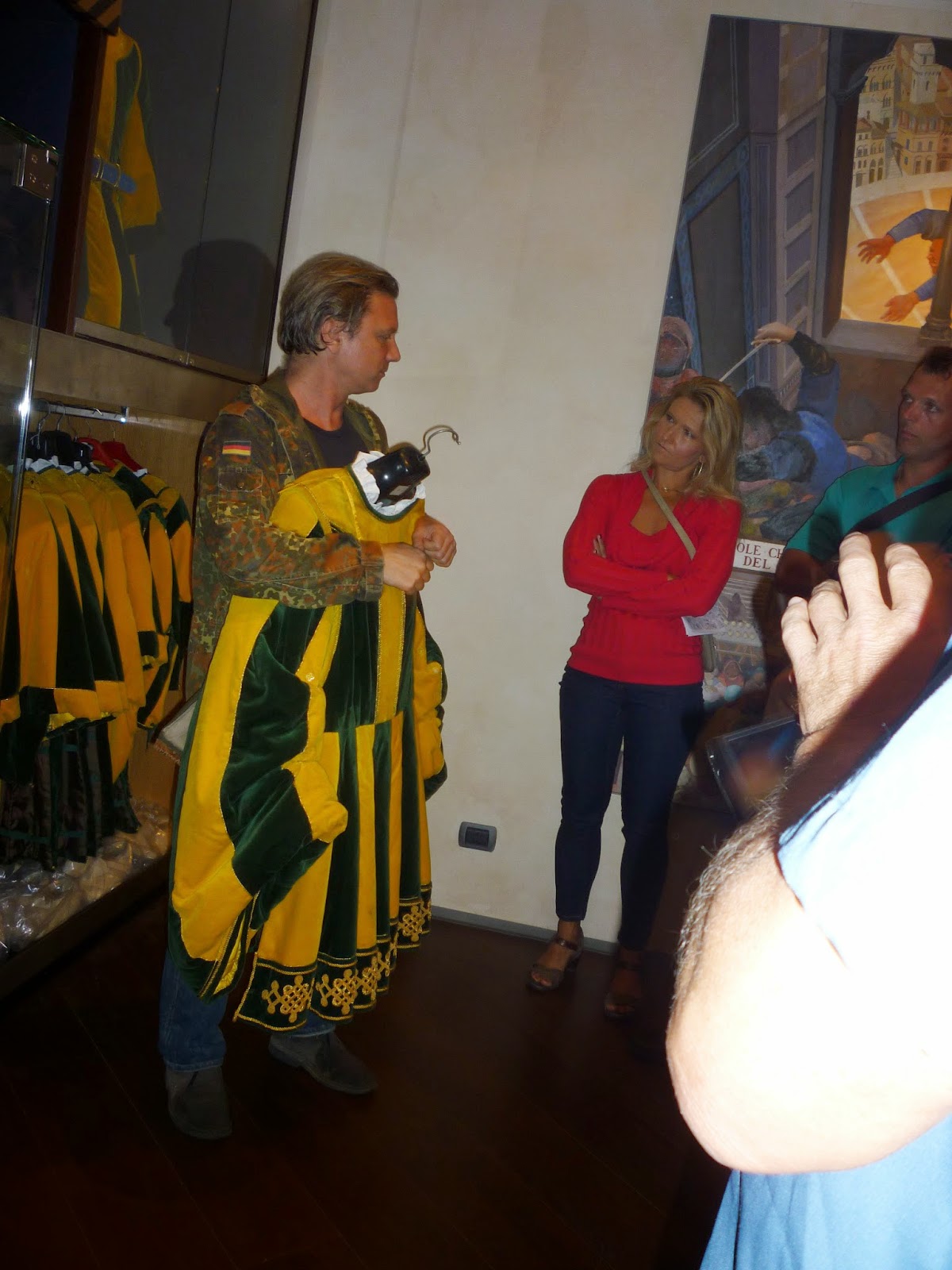
Dario giving the tour of the Contrada

Winning Palio Banners from 1837 & 1838

Friday, October 24, 2014

Too Much Tuscan Sun by Dario Castagno - READ IT!!!

Too Much Tuscan Sun: Confessions of a Chianti Tour Guide by Dario Castagno was a super-duper Feel Good/Awesome book.  So many funny stories about his clients and local history of the area.  On a recent trip I was able to meet Dario and actually tour the Caterpillar contrada.  So very cool.

Readit/Readit/Readit - It will take you to Sienna and the lovely Italian country-side, if only in an arm chair, and make you laugh all at the same time.


Defending Jacob - Will It Ever End???

Defending Jacob by William Landay was my book clubs book for Oct 2014.  I could NOT finish it.  It never ended...  400 pages of Turrow-who-wants-to-be-Grisham-esque courtroom drama.  Aye Vey, I couldn't take it.  I know there's a surprise ending, but I cannot reach the end of this novel.

Just Sayin'

Thursday, July 3, 2014

Factors Contributing to Caesar's Demise...

After reading about Caesar and his military conquests, I have began to wonder why and this great man was not more informed about a plot against his life. [The author has started to refer to Caesar as "The Dictator."  This puts visions of Caesar marching around as Charlie Chaplin in his robes.  Funny notion.]  Furthermore, the author refers to it as a conspiracy, not a coup as I have come to view it.  A coup for the good of Rome.  Had Caesar put an end to the conspiracy or coup, the history of the Roman Republic would have turned out much differently.

Caesar's "duty" was to restore the [Roman] Constitution for the good of the Republic.  The conspiracy against Caesar started one year prior to his death, March 15, 44 BC.  There was a strong disaffection among the ruling class.  There were up to 60 people involved in the effort to kill Caesar.  They called themselves Freedom Fighters (Liberatores,) they were dissatisfied with the immense death toll from the recent civil war.  At the Battle of Munda there were 30,000 deaths alone.  Pompey's son Cneaus was killed in this fighting with his troops.

In addition to the political unrest, the treasury was bankrupt from fighting the civil war.  A further strain was the cost of administering a larger republic and the food supplements handed out in Rome and elsewhere in the republic.  And Anthony's mismanagement of the government during Caesar's absence during the civil war and while in Egypt.

On of the other contributing factors, in my opinion, was the death of Cato.  When Cato killed himself, it was a big blow to Caesar's reputation.  Cato was respected in the Senate and by the Optimates; but that someone would take his life for dignity and honor really hit the heart of what Caesar was trying to do.  Then the publication of Cato by Cicero, Anti-Cato by Caesar and the pamphlet by Brutus did not do Caesar well in the public eye.

Lastly, when the author refers to Caesar as "Dictator," he was not really.  He turned down the opportunity "officially" when the Senate offered it to him, but he was acting the role.  Nothing upset the Roman people more then the idea of a king or dictator for life.  Caesar should have know that from his powers of working with people and command in the military.  Maybe the military service also kept him thinking he was in charge and unstoppable.  That I don't know.

Note on the civil war:  estimated 100,000 Roman citizens had lost their lives since 49 BC.  Certain citizens viewed the civil war as two great generals going at each other for power.  Pompey, representing the Optimates, the conservative faction and Caesar, representing the Populares, the people.  Therefore the large death toll was uncalled for.

People mentioned in the conspiracy:
Caius Trebonius - Governor of Spain - asked Mark Anthony if he would join plot to kill Caesar
Mark Anthony - ran Italy in Caesar's absence - Remained silent when approached by Trebonius
Marcus Brutus
Caius Cassius Longius - Quaestor - Taken over Syria after Crassus's death at the Battle of Carrhae - Success with respect to Parthians in 51 BC when Cicero was Governor of Cilicia a neighboring province

Wednesday, July 2, 2014

And the Mountains Echoed by Khalid Hosseini

Wyckfield Book Group - July Selection
Setting:  Maidan Sabz - rural village outside of Kabul in the 1950s

Cast of Characters:
Baba Saboor Ayub - father
1st wife dies in child birth

  • Abdullah - son
  • Quais - son taken by div/educated
  • Pari - daughter - collects feathers

Parwana - Second Wife
Masooma - Parwana's sister
Nabi - Parwana's brother and chauffeur to Wahdati family in Kabul
Of Mrs. Wahdati - from chapter 2 - "Abdullah looked at her and sensed something alarming in the woman, beneath the makeup and the perfume and the appeals for sympathy, something deeply splintered." (p 43)

Opening Quote:
"Out beyond ideas of wrong doing and right doing, there is a field.  I will meet you there."  Jelaluddin Rumi, 13th century

Darul Aman Palace - mentioned in chapter 3 - where Masooma would like to go

Darul Aman Place

From Wikipedia - http://en.wikipedia.org/wiki/Darul_Aman_Palace
Darul Aman Palace ("abode of peace" or, in a double meaning "abode of Aman[ullah]")[1] is a European-style palace, now ruined, located about sixteen kilometers (ten miles) outside of the center of KabulAfghanistan.
Darul Aman Palace was built in the early 1920s as a part of the endeavours of King Amanullah Khan to modernize Afghanistan. It was to be part of the new capital city (also called Darul Aman or Darulaman) that the king intended to build, connected to Kabul by a narrow gauge railway.[2] The palace is an imposing neoclassical building on a hilltop overlooking a flat, dusty valley in the western part of the Afghan capital. Intended as the seat of a future parliament, the building was unused for many years after religious conservatives forced Amanullah from power and halted his reforms.
The inside of the palace is in very bad shape. Photo taken July 2010.
Darul Aman Palace was gutted by fire in 1969. It was restored to house the Defence Ministry during the 1970s and 1980s. In the Communist coup of 1978, the building was set on fire. It was damaged again as rival Mujahideen factions fought for control of Kabul in the early 1990s. Heavy shelling by the Mujahideen after the end of the Soviet invasion left the building a gutted ruin.
In 2005, a plan was unveiled to refurbish the palace for use as the seat of Afghanistan's future parliament.[3] It was to be funded primarily by private donations from foreigners and wealthy Afghans. As of July 2010 there were no signs of renovation of the palace. The palace was reportedly part of the targets in attacks launched on 15 April 2012 for which the Taliban claimed responsibility.[4]
On a hill near the Darul Aman Palace stands the Tajbeg Palace, built as a residence for Amanullah, his wife, Queen Soraya, and their family.