Tuesday, June 13, 2017

Causes of the Transition from Republic to Empire - The Growing Importance of the Generals

I have spent a lot of time studying the transition of Rome from Republic to Empire over the last few years.  Recently I have read Rubicon:  The Last Years of the Roman Republic by Tom Holland and The Death of Caesar by Barry Strauss.  Both books have strengthened my belief that the political, economic and social conditions were right for a change that were bread over the previous 100 years.

Let's start with the Political element.
In the 100 years before Caesar's assassination, the Republic was expanding.  Rome was constantly at war.  The political situation is tricky and volatile. 
  • Macedonian Wars (4) - ending around 150 BC
  • Battle of Cornith - 146 BC
  • Punic Wars (Carthage) - ending about 149 BC
  • Jugurthan War - ending around 112 BC
  • Social Wars (between Italian tribal groups) 91 - 88 BC
    • Sulla's First Civil War - Sulla marches troops into Rome for the first time - 88 BC
    • Sulla's Second Civil War + Dictator - 82 BC
  • Servile Wars (3) - Slave Wars - ending around 73 BC
  • Mithridic Wars (3) - ending around - 63 BC
  • Siege of Jerusalem (Pompey) - 63 BC
  • First Triumvariate (Caesar, Pompey, Crassus) - 59 BC 
  • Caesar Crosses the Rubicon - 49 BC - Troops entering Italian soil for a second time

What I call the Great Generals were on the scene (or on the march):  Marius and Cinna.  Both men were great leaders and led Rome to great victories and expanded boarders.  Victory meant more money pouring into the treasury of Rome.  Great prosperity, more slaves etc...  There were even internal struggles that Rome must deal with:  Social Wars (citizens in city states wanting the right to vote) and Servile Wars (Slave Wars, remember Spartacus?).

Early on there is in-fighting between Generals:  Marius and Cinna.   Both Marius and Cinna had large armies.  In the end, Marius, who was consul seven (7) times beat Cinna, only consul three (3) times.  Cinna's troops turned on him as he was preparing to meet Marius for battle for command of the Mithradic war/s.

Marius was a Populare, for the people.  There was much dissent between himself and the Optimates or the Patrician class.  Whereas, his enemy, Sulla, was an Optimate, or of Patrician class.  (I think think Sulla was a 'new man,' growing up poor; but moved up as a very successful general.)  Sulla served under Marius in the Jugarthine and Gallic Wars.  He was appointed Governor of Cilia and held other official positions which made him a Patrician.  There was a power struggle between the Populares and the Optimates.  (Caesar was a Populare too.  His aunt Julia was married to Marius.)

This leads me right into the Social element.
Many of these men were 'New Men,' or men that just made their fortunes.  Not from the old Roman families.  They had wealth, military victories and power.  Yes, Power!  Their troops were loyal too them and they got much bounty when they won their wars against foreign lands.

Friday, June 2, 2017

A Short History of the Vatican & Other Interesting Facts

This short history of the Vatican is from Mistress of the Vatican by Eleanor Herman and Basilica by R. A. Scotti.

A Really Short History of the Vatican-
Built on the circus where Caligula held his chariot races.  He put an obelisk in the middle of the circus that was 1200 years old.  Christians were martyred in the arena.  Nero smeared the early Christians with tar and used them as human torches.  Imagine the smell.

The Vatican was built in the form of the Roman Court of Justice, a rectangular building separated into 3 sections by two rows of columns.

The apostle Paul was killed in the second purge of the Christians, beheaded on his way to the port city of Ostia.  The apostle Peter was crucified upside down as he was an unworthy proxy for Christ.

Constantine built a church on the place where Peter was buried.  The Basilica of St. Peter's in 326 AD.

Other Fun Facts-
Pope Nicholas V brings the Papacy back to Rome from Avignon in 1447 and decides to rebuild St. Peter's Basilica built by Constantine in 326 AD with architect Bernardo Rosellino.  Rosellino worked with Brunelleschi in Florence. He also founded the Vatican Library.

Women in the Church- Christianity was practiced in the home, the realm of the women since it had to be practiced in private.  Many Christians were persecuted.  As a result, women played a role.  Clergy married until Pope Siricius denies the marriage of clergy in the late 300's.  (St. Peter was married.)  Married clergy would leave their land/income to their son's and/or use their income for dowries for their daughters and not giving the land/money to the church on their death.  Ecclesiastical Inheritance. But the marriage of clergy went unheeded until 1050's when Pope Leo IX enslaved clerical wives to clean churches and prepare meals.  Being a clerical wife became very unpopular.

But still many Cardinals and Pope's married.

Olympia Maidalchini - A Formidible Woman

Mistress of the Vatican:  The True Story of Olympia Maidalchini by Eleanor Herman was a book I stumbled on by chance.  I happened to be browsing some titles on Isabelle D' Este, there aren't many, when I came across this book.  It looked interesting.  No, Olympia wasn't the legendary Pope Joan, but who was she.  I started reading...  I couldn't put the book down.  By the end there was a lot, maybe too much about Pope Innocent X, Gianbattista Pamphili, but he was after all her ticket into the Vatican.


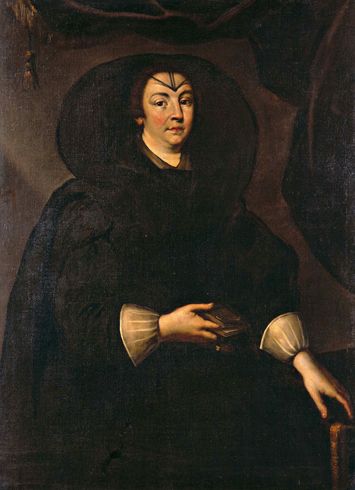
Donna olimpia maidalchini.jpg
Olympia Maidalchini Pamphili


Initially, Olympia's father wanted her to enter the convent.  She had no plans of doing that!  She out smarted a local priest her father got to talk her into going into the convent and then didn't have to enter it.  She was one smart young cookie.  She eventually marries Paolo Nini, the richest man in the town of Viterbro, Italy where she grew up. Sadly, Paolo dies young and leaves our lady with some money.  

Our young heiress, attracts a rich old noble who's family needed an infusion of money, Pamphilo Pamphili.  Olympia moves to Rome and marries him.  They are married for 22 years and have 3 children together.  Olympia has a brother-in-law that was a cannon lawyer, Gianbattista Pamphili.  Olympia and he become fast friends as Gianbattista likes to talk to and spend time with motherly ladies.  Were they having an affair?  The author suggests rumors going around Rome, but proves nothing either way.  Gainbattista had a reputation as a scholarly man and a good cannon lawyer, who was not easily corruptible.  A good reputation to have in Renaissance Italy.

Time passes and Gianbattista becomes the Papal Nuncio to Naples in the 1621 under Gregory XV.  He served there for 2 years and Olympia went with him to Naples.  (It took the papal courier 3 days to get from Naples to Rome.)  Gianbattista would send reports back to Rome weekly that were up to 15 pages long of the things occurring in Naples with regard to the Holy Roman Church.  Naples was controlled by Spain at this time.  Olympia's money was paramount in getting Gianbattista appointed as nuncio (keeping up appearances) and later made a cardinal.

Pope Innocent X
Gianbattista Pamphili, Innocent X
 Later under Urban VIII, Barbarini, Gianbattista was made Papal Nuncio in Spain.  This was a key position that represented an elevation in status for the Pamphili family.  At the time there was a farm/veg market in front of the town house and it was not in good repair for a family seeking to have a Cardinal-ship in the family.

In 1623, Maffeo Barbarini was elected Pope Urban VIII.  In 1626 Gianbattista was appointed Papal Nunzio to Spain under King Philip IV.  His loyalty to Spain was never questioned in future, even when he was made Pope.  1n 1629 Gianbattista was made a Cardinal.  In 1634 - 1638 Olympia enlarged the size of the town house on Plaza Novana that the Pamphili family called home, which is now the Brazilian Embassy.  Girolamo and Carlo Rinaldi were the architects to transform the palace to what we know today.

Brazilian Embassy Rome 04 2016 6533.jpg
Palazzo Pamphili
Gianbattista gets elected Pope Innocent X in 1644 - 1655.  Olympia ran the Vatican from behind the scenes for several years.  If you wanted to get something by Innocent, you had to get it before Olympia.  She was the first lady of Rome.  Gianbattista appoints Camillo, Olympia's son to be Cardinal Nephew.

This only lasted for 2 years until he married the Princess of Rossano, Olympia Alsobrandini, a rich widow of Paolo Borghese.  (Olympia wanted Camillo to marry Lucrezia Barbarini, but Camillo would not have it.  Camillo and his mother had a strained relationship.)  Olympia never really warmed up to her daughter-in-law.  Olympia's other children:  Maria and Costanza.  Maria marries Andrea Giustiniani and has her grand-daughter Olympiuccia.


Image result for princess rossano
Olympia Aldobrandini, Princess of Rossano

Olympia took on many causes during her time.  One was dowry-less girls.  In 1645, Olympia was made Princess of San Martino.  Here she built a town to help dowry-less girls (and ladies of the night who wanted to reform.)  It was here in San Martino, not far from Veterbro, that Bernini helped design a church and Olympia's tomb.  Today there are descendants of the original inhabitants living in the town.

Olympia also has the Fountain of the Four Rivers commission for the front of Plaza Novana.  Using the tumbled down obelisk brought back to Rome by Caligula from Egypt. The obelisk had been brought down by the Goths in 527 and sat by the San Sebastian Gate of Rome ever since.  Olympia commissioned Bernini to make a tremendous fountain to enrich the plaza.  The rivers represented were the Nile in Africa, Danube in Germany, Ganges in India and the Plate in South America.

Image result for fountain of the four rivers
Fountain of the Four Rivers


When Gianbattista was Innocent X was elected Pope, the Pamphili family took away all the honors from the Barbarini family.  There were many reasons for this, but chiefly the Vatican was in huge debt.  (Barbarini's supported France and Pamphili's supported Spain.)  The Barbarini family was exiled for 2 years to France.  Over time, Olympia's granddaughter, Olympiuccia, was forced to marry Maffeo Barbarini, age 22 in 1653.  By age 13 she was pregnant.  (Yuck!)  She was forced to do this to unite the two families.

2dhbas2
Olympia Giustiniani Barbarini

Olympia is exiled from Rome to San Martino in 1650 for 2 years.  She had been selling papal offices, managing the papal accounts and adding money, position to the Pamphili family.  Innocent decides to take over and manage things on his own with his Cardinal friends.  Eventually, Olympia comes back to Rome, but in a reduced capacity.

She dies of plague in 1657 in San Martino.  She created a dynasty and ran the papacy from the side lines for a while.  A formidable woman!


Friday, March 4, 2016

Jefferson and the Tripoli Pirates by Brian Kilmead

Read this book if you like swash buckling action and some lesser know post-Revolution American history.  I love to read about Jefferson, but this book dwells on the great man only briefly.  The main characters are the sea captains and the prisoners and the rulers who made Algeria, Tunis and Morroco what they were in the late 1700's early 1800's.

The book opens with the Capture of the Dauphin in 1785 who was taken prisoner for 10 years.  The Maria was also captured too.  Most of the Americans were taken prisoner and made to be Christian slaves.  They could die of tropical diseases, work as slaves (many of the enlisted preformed hard labor, versus the officers that helped the ruling class out) or convert to Islam.  Islamic people could not have other Islamic people as slaves.

The other interesting/scary factor was the amount of time it took for news to travel in the late 1700s.   It could be up to 1 year for news to travel back (and forth) to the Executive branch of the government, the United States.  Wow.  Not like today's instant coffee world of the internet!


Peter Lisle --> Murat Rais
Philadelphia 300 people...  taken prisoner
Bainbridge captained the ship

Wednesday, August 5, 2015

The Reluctant Matador by Pryor - Put Down or Finish?

The Reluctant Matador by Mark Pryor is beyond formulaic.  I'm 3/4 of the way into the book and do I  put the book down or finish it.  There is a slight pulse, but that is all.  Can't wait to start the next book.  Camilleri!

Monday, April 6, 2015

Ghost on the Throne by Romm - I Did Not Like How This One Ended

Ghost on the Throne by James Romm was not an easy book to read.  I have been reading it since the holidays and just finished it.  I thought this book would go more into Ptolemy and the connection to Alexandria.  The book just superficially touched upon the subject matter.  (That is why I picked this one up in the first place.  Cmon, Egypt is a big deal and Ptolemy really had a good thing going.)  This book was more into the wars of succession between Peithon, Antipater and then Antigonus One Eye, Cassander and Eumenes.  I must say that history is way better then TV as I did not like how it ended.  If I were the author, I would have made Olympius the victor, not Cassander.  Really???  Hollywood will back me up.  But all kidding aside, this is a really good book.  It breaks the events down into morsel sized bites so the reader can understand what is going on.

The book spans the time of Alexander's death in 323 BC to 316 BC.  You are introduced to characters that you did not know just by reading Alexander's biography.  Papers could be written on them all.  Things that caught my attention:

Olympias and Philip II role in Alexander (The Great's) Life -
1. Further reading on Philip II is required.

  • Unified Greece during 23 year reign
  • Made first constitution
  • Established a monarchy - Empire for his son to inherit
  • Military advancements - many successful battles to enlarge empire's boundaries & military advancements

2. Olympias - A very strong female role model!  Girls take heed, nothing is too small for you to accomplish!
  • Born a Molossian [Greek] Princess named Polyxena in Epirus (southern Albania today)
    • Descended from Trojan war heros
    • Ritualistic and tribal society
  • Philip II 5th bride
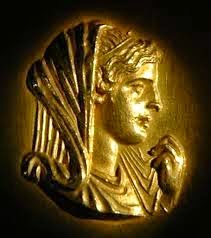
Olympias

Angelina Jolie as Olympias 

p284 - "Greek writers loved to contemplate women who resembled tragic heroines, and in Olympias they found all the parallels they could ask for.  Born a neo-Trojan princess named Polyxena, she seemed to them to have lived her whole life in mythic roles.  As Philip's wife, she had morphed into Medea, murderess of the princess who stole her Husband's affections; as mother of the dead Alexander, she resembled Hecuba grieving for the fallen Hector.  As ruler of Macedonia,  she evoked Clytemnestra, the iron-fisted queen of Argos, as well as Antigone, but an Antigone in reverse, driven by her passionate devotion to kin and unbury the dead.  Whichever of these roles we cast her in, Olympias is undeniably a tragic figure."

p309 - "Olympias died at age 56 or 57.  She had exercised more power than any woman in Europe up to her time, with the possible exception of her rival and victim Adea."

What happens in between is after Alexander's death, Olympias and her daughter Cleopatra flee Alexandra to Epirus.  Olympias tries to get Cleopatra to marry one of Alexander's Companion generals, but that falls through.  She then takes over as regent for her grandson, Alexander (Rhoxane's son) and allies with Polyperchon.

In the end, she makes a fierce stand, but was not able to withstand the siege put on by Cassander.  Her royal party is starved out and she is finally taken prisoner by Cassander run through with a sword by his men.  But the life and the example she led up to that point were phenomenal.  Almost like Terentia, Cicero's wife, but wielding more power.  [The book says Adea also had power, married to Alexander's half-brother, but it evident that Olympias wielded equal power for a much longer period of time.]

What influence did this have over Alexander?  What influence did both parents have over Alexander?  Those are some pretty big shoes to fill.

Which leads me to the next question which popped onto my radar this morning.  Olympias's, Philip II and most of all,Alexander's life was quite extraordinary.

  • What makes a extraordinary life? 
  • Could our lives be considered extraordinary on a smaller scale?
  • Or must accomplishments be grand and stand the test of time for this to be true?
I must think about this one!  More later/P

Monday, March 23, 2015

The Rosie Project, The Storied Life of AJ Fikry and The Signature of All Things...

I have been on a fictional tare recently to keep up with the lovely ladies in my CV book group.  The titles they did not read were The Storied Life of AJ Fikry by Gabrielle Zevin and The Signature of All Things by Elizabeth Gilbert.  The only book I would recommend would be The Rosie Project by Graeme Simsion, the book they did read.
--------------------------------------------------------------------------------------------------------------------------

The Rosie Project was a cute, non-conventional love story.  How love can change us?  Or just a cute work of fiction set in Australia.  There really isn't much meat to talk about, but if you are headed to the beach for spring break, pick it up!  The lead character, Don, is a high functioning autistic man.  He is a professor at university teaching genetics and decides to help Rosie find her biological dad and falls in love with her.

There is a follow up book called The Rosie Effect.
--------------------------------------------------------------------------------------------------------------------------

I'm not crazy about The Storied Life of AJ Fikry.  It came up as a reco when I purchased The Rosie Project.  Should have known?  But at least I got it from the library.  Again, this book is the story of AJ Fikry's twisty-turney life.  There is a love story, but it ends suddenly.

The best part of this book is the relationship with his daughter.  The wonderful way Zevin has AJ raise his daughter on the island book store.  Therein lies the magic.
--------------------------------------------------------------------------------------------------------------------------

The Signature of All Things by Elizabeth Gilbert of Eat Pray Love fame was a real plot mess.  Why?  Ms. Gilbert is a terrific writer.  The writing is excellent, absorbing; but the plot is weird.  Say no more.  And then the book ends!  Everyone dies and the book just ends (one would believe as Alma does.)  I get what she is trying to do, but it is unsatisfying.

There is a discussion in Chapter 15 on the title's meaning, the signature of all things and how god has left his mark on the world.  You can see God hand in the world and people must come to see and realize this.  After Chapter 15 there is a continued discussion, in Chapter 31, of self-sacrifice and altruism.  Alma uses the example of her sister Prudence who gave up her true love, George and Prudence's devotion to the abolitionist cause.  Alma recognizes this after her father expires and leaves the estate to her sister.  Alma also realizes her father truly loved her as he left everything to her.  One of this one is worth two of the other (referring to Prudence.)  But we really don't get to the explanation of why Alma/Gilbert introduces altruism & self-sacrifice into the evolutionary mix.  Furthermore, Gilbert continues to state, via the characters evolution cannot take into account human consciousness.

It is in the discussion of the signature of all things that this book distinguishes itself.  The addition of the self-sacrifice and human altruism to the equation make the conversation more interesting, with the further complication of human consciousness.  Gilbert, by way of Alma, also states the purpose of life is the attainment of knowledge.  Alma figures this out before expiring.  One also hopes Alma got all her questions answered in that last moment and is happily communing with her also departed husband.

Sadly, I do not think the average reader is going to pick up on this line of inquiry in this book as it more going to the heart of historical romance set in Philadelphia and Tahiti.  It is too bad as Ms. Gilbert could have taken this line of inquiry onto something bigger in the book notes.

The reason I hooked on to this discussion topic is a conversation I had with a friend on the knowledge and/or quantification of God.  Humans used their consciousness to know there was a higher power in the universe and then with the invention of science tried to become closer to him.  But there is no way to quantify God.