Friday, March 4, 2016

Jefferson and the Tripoli Pirates by Brian Kilmead

Read this book if you like swash buckling action and some lesser know post-Revolution American history.  I love to read about Jefferson, but this book dwells on the great man only briefly.  The main characters are the sea captains and the prisoners and the rulers who made Algeria, Tunis and Morroco what they were in the late 1700's early 1800's.

The book opens with the Capture of the Dauphin in 1785 who was taken prisoner for 10 years.  The Maria was also captured too.  Most of the Americans were taken prisoner and made to be Christian slaves.  They could die of tropical diseases, work as slaves (many of the enlisted preformed hard labor, versus the officers that helped the ruling class out) or convert to Islam.  Islamic people could not have other Islamic people as slaves.

The other interesting/scary factor was the amount of time it took for news to travel in the late 1700s.   It could be up to 1 year for news to travel back (and forth) to the Executive branch of the government, the United States.  Wow.  Not like today's instant coffee world of the internet!


Peter Lisle --> Murat Rais
Philadelphia 300 people...  taken prisoner
Bainbridge captained the ship

Wednesday, August 5, 2015

The Reluctant Matador by Pryor - Put Down or Finish?

The Reluctant Matador by Mark Pryor is beyond formulaic.  I'm 3/4 of the way into the book and do I  put the book down or finish it.  There is a slight pulse, but that is all.  Can't wait to start the next book.  Camilleri!

Monday, April 6, 2015

Ghost on the Throne by Romm - I Did Not Like How This One Ended

Ghost on the Throne by James Romm was not an easy book to read.  I have been reading it since the holidays and just finished it.  I thought this book would go more into Ptolemy and the connection to Alexandria.  The book just superficially touched upon the subject matter.  (That is why I picked this one up in the first place.  Cmon, Egypt is a big deal and Ptolemy really had a good thing going.)  This book was more into the wars of succession between Peithon, Antipater and then Antigonus One Eye, Cassander and Eumenes.  I must say that history is way better then TV as I did not like how it ended.  If I were the author, I would have made Olympius the victor, not Cassander.  Really???  Hollywood will back me up.  But all kidding aside, this is a really good book.  It breaks the events down into morsel sized bites so the reader can understand what is going on.

The book spans the time of Alexander's death in 323 BC to 316 BC.  You are introduced to characters that you did not know just by reading Alexander's biography.  Papers could be written on them all.  Things that caught my attention:

Olympias and Philip II role in Alexander (The Great's) Life -
1. Further reading on Philip II is required.

  • Unified Greece during 23 year reign
  • Made first constitution
  • Established a monarchy - Empire for his son to inherit
  • Military advancements - many successful battles to enlarge empire's boundaries & military advancements

2. Olympias - A very strong female role model!  Girls take heed, nothing is too small for you to accomplish!
  • Born a Molossian [Greek] Princess named Polyxena in Epirus (southern Albania today)
    • Descended from Trojan war heros
    • Ritualistic and tribal society
  • Philip II 5th bride
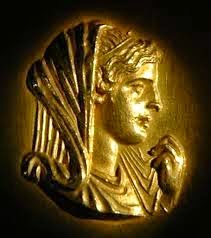
Olympias

Angelina Jolie as Olympias 

p284 - "Greek writers loved to contemplate women who resembled tragic heroines, and in Olympias they found all the parallels they could ask for.  Born a neo-Trojan princess named Polyxena, she seemed to them to have lived her whole life in mythic roles.  As Philip's wife, she had morphed into Medea, murderess of the princess who stole her Husband's affections; as mother of the dead Alexander, she resembled Hecuba grieving for the fallen Hector.  As ruler of Macedonia,  she evoked Clytemnestra, the iron-fisted queen of Argos, as well as Antigone, but an Antigone in reverse, driven by her passionate devotion to kin and unbury the dead.  Whichever of these roles we cast her in, Olympias is undeniably a tragic figure."

p309 - "Olympias died at age 56 or 57.  She had exercised more power than any woman in Europe up to her time, with the possible exception of her rival and victim Adea."

What happens in between is after Alexander's death, Olympias and her daughter Cleopatra flee Alexandra to Epirus.  Olympias tries to get Cleopatra to marry one of Alexander's Companion generals, but that falls through.  She then takes over as regent for her grandson, Alexander (Rhoxane's son) and allies with Polyperchon.

In the end, she makes a fierce stand, but was not able to withstand the siege put on by Cassander.  Her royal party is starved out and she is finally taken prisoner by Cassander run through with a sword by his men.  But the life and the example she led up to that point were phenomenal.  Almost like Terentia, Cicero's wife, but wielding more power.  [The book says Adea also had power, married to Alexander's half-brother, but it evident that Olympias wielded equal power for a much longer period of time.]

What influence did this have over Alexander?  What influence did both parents have over Alexander?  Those are some pretty big shoes to fill.

Which leads me to the next question which popped onto my radar this morning.  Olympias's, Philip II and most of all,Alexander's life was quite extraordinary.

  • What makes a extraordinary life? 
  • Could our lives be considered extraordinary on a smaller scale?
  • Or must accomplishments be grand and stand the test of time for this to be true?
I must think about this one!  More later/P

Monday, March 23, 2015

The Rosie Project, The Storied Life of AJ Fikry and The Signature of All Things...

I have been on a fictional tare recently to keep up with the lovely ladies in my CV book group.  The titles they did not read were The Storied Life of AJ Fikry by Gabrielle Zevin and The Signature of All Things by Elizabeth Gilbert.  The only book I would recommend would be The Rosie Project by Graeme Simsion, the book they did read.
--------------------------------------------------------------------------------------------------------------------------

The Rosie Project was a cute, non-conventional love story.  How love can change us?  Or just a cute work of fiction set in Australia.  There really isn't much meat to talk about, but if you are headed to the beach for spring break, pick it up!  The lead character, Don, is a high functioning autistic man.  He is a professor at university teaching genetics and decides to help Rosie find her biological dad and falls in love with her.

There is a follow up book called The Rosie Effect.
--------------------------------------------------------------------------------------------------------------------------

I'm not crazy about The Storied Life of AJ Fikry.  It came up as a reco when I purchased The Rosie Project.  Should have known?  But at least I got it from the library.  Again, this book is the story of AJ Fikry's twisty-turney life.  There is a love story, but it ends suddenly.

The best part of this book is the relationship with his daughter.  The wonderful way Zevin has AJ raise his daughter on the island book store.  Therein lies the magic.
--------------------------------------------------------------------------------------------------------------------------

The Signature of All Things by Elizabeth Gilbert of Eat Pray Love fame was a real plot mess.  Why?  Ms. Gilbert is a terrific writer.  The writing is excellent, absorbing; but the plot is weird.  Say no more.  And then the book ends!  Everyone dies and the book just ends (one would believe as Alma does.)  I get what she is trying to do, but it is unsatisfying.

There is a discussion in Chapter 15 on the title's meaning, the signature of all things and how god has left his mark on the world.  You can see God hand in the world and people must come to see and realize this.  After Chapter 15 there is a continued discussion, in Chapter 31, of self-sacrifice and altruism.  Alma uses the example of her sister Prudence who gave up her true love, George and Prudence's devotion to the abolitionist cause.  Alma recognizes this after her father expires and leaves the estate to her sister.  Alma also realizes her father truly loved her as he left everything to her.  One of this one is worth two of the other (referring to Prudence.)  But we really don't get to the explanation of why Alma/Gilbert introduces altruism & self-sacrifice into the evolutionary mix.  Furthermore, Gilbert continues to state, via the characters evolution cannot take into account human consciousness.

It is in the discussion of the signature of all things that this book distinguishes itself.  The addition of the self-sacrifice and human altruism to the equation make the conversation more interesting, with the further complication of human consciousness.  Gilbert, by way of Alma, also states the purpose of life is the attainment of knowledge.  Alma figures this out before expiring.  One also hopes Alma got all her questions answered in that last moment and is happily communing with her also departed husband.

Sadly, I do not think the average reader is going to pick up on this line of inquiry in this book as it more going to the heart of historical romance set in Philadelphia and Tahiti.  It is too bad as Ms. Gilbert could have taken this line of inquiry onto something bigger in the book notes.

The reason I hooked on to this discussion topic is a conversation I had with a friend on the knowledge and/or quantification of God.  Humans used their consciousness to know there was a higher power in the universe and then with the invention of science tried to become closer to him.  But there is no way to quantify God.


Thursday, December 4, 2014

Popular by Maya Van Wagenen - MUST READ!!!

Guys -
I'm late for work, but I must urge ALL of you ladies to pick up this book.  It's YA, but oh so wonderful.  Popular outlines what we all went through in Junior High and High School and Ms. Van Wagenen is so very funny. 

P108-
"Whenever we come here [beach on MX side of TX border] we play a very special game in the car.  It's called, "What Not to Say When Asked 'Are you a US Citizen?"

Here are our top five answers that would most likely get you taken away in handcuffs.
  • Que?
  • I plead the Fifty
  • Is there a right answer?
  • The question is, are you?
AND...
  • I am, but I'm not sure about the two kids in the trunk."
It is the story of how Maya Van Wagenen uses Betty Cornell's Teenage Popularity Guide written in the 1950s to make herself popular right now.  The story is funny and touching at the same time.  It will make you laugh and remember what it was like.  Get it from the library ASAP!

Maya starts wearing a pearl necklace per Betty's direction.  She is convinced with all her changes she is still unpopular, but when she sees a "semi-popular Choir Geek... wearing a string of pearls around her neck.  A glimmer of hope in a dark and unpopular world [opens up to her.]"

I think that glimmer is what makes us all go on.  Day by day, no matter how old or what the circumstance.  Again.  This book will make you smile and laugh.  Read it!

Best/PD

Tuesday, November 18, 2014

Venice - A New History by Thomas F. Madden

I just started reading this book, but it is really good.  Easily readable.  So, let's get started!

Introduction:  Venice founded in March 25, 421 and 452 after Atilla the Hun over-ran the city.  Western Roman Empire, WRE (economy) in decline.  Eastern Roman Empire, ERE still going strong (until 700s.)  And here comes Veneto onto the scene.  Roman rulers ruled from Ravenna, near by.  Roman Empire divided into two halves by Diocletian in late third century.  Constantine I, first Christian Emperor, founds Constantinople (Istanbul) in 330 AD; capital of ERE. Romulus Augustus, 476 AD, last Roman Emperor in the WRE; conquered by Odoacer, a Gothic war lord.  488 Theodoric wanted to overthrow Odoacer.  493 Theodoric captures Ravenna and co-rule with Odoacer, but then assassinates him during a banquet to celebrate.

Chapter 1:  Refugees on the Lagoon:  The Origins of Venice
The lagoons were created from the run off from the Alps, sediment.
Sediment caused banks to be formed. Lidi or islands near the Adriatic.  Canals were present.
Fun Fact:  Ravenna was a port at this time and now it is inland due to the growth of the coast line due to sedimentation.
Main road between WRE and ERE was the Via Postumia, which went through this region.
Culturally, Veneto was a mix of Roman, Greek and Leventine elements
- Gothic Invasion - Rome sacked 410 AD
Foundation Stories:  Padua sent 3 consuls to an island group to Rivoalto or "high bank", today's Rialto. And there was a winding canal, Grand Canal, to establish a trading post.  (Trade is the foundation of the Venetian economy.)

Venice gets rich from salt trade. Up until medieval & Renaissance times. The Salt Office was an important office.


Monday, November 3, 2014

The Etruscans by Barker and Rasmussen - Dry But Good

After reading several books on Tuscany and Chianti, I took this book with me on my journey to India.  Go to India, read about pre-Roman Italy or the Etruscans.  Makes perfect sense!  For me anyway.

The book is good, but dry.  I am enjoying it.  It took me a while to get into, but once I did, I don't want to put it down.  The book goes into the history of the Italian peninsula on a grand scale, starting 50,000 years ago.  We quickly move into the Etruscans.  The book suggests the parallels to the Greek culture, no secret there and goes into great detail on the political, economic and social aspects  the two groups.  Furthermore, there is a reoccurring theme of archaeology versus histories.  [Polybus, Livy, Pliny and Tacitus, written from 2nd century BC to 2nd century AD.]

The Greeks and Phoenicians established colonies in Italy in 700 BC.  The Phoenicians established themselves in and traded with:
  • North Coast of Africa
  • Western Sicily
  • Sardinia
  • Southern Spain
Whereas, Greeks established themselves in and traded with:
  • Southern Italy
  • Eastern Sicily
  • Corsica
  • Southern France 
  • Eastern Spain
"In Italy the first Greek colony was established from the island of Euboea at Pithekoussai (or Pithacusa) on the island of Ischia in the Bay of Naples in 750 BC." p75 There was another colony of Greeks near Naples in 700 BC.  These were all established as Greece was growing stronger as trading power [economy] and needed room to grow/trade.  This again goes to my theory that southern Italy was initially Greek and hence the love of anything Greek.  These people mingled with the locals and became the Latins.

There are several theories as to where the Etruscans came from.  I am going to go with the migration down over the Alps, from the northern part of Europe or indigenous people's locally who banded together over time.

Map of Etruria and it's People
Three major structural features of the Landscape are the Apennines, Pre-Apennines and Anti-Apennines are limestone hills running the length of central Italy.  The eastern boundary is today's Autostrada between Florence and Rome.  Over time, the Etruscans developed hill top villages as defensible locations to other groups.  These groups were initial subsistence farmers growing cereal and grains to live.  But over time started growing olives and grapes (for wine) additionally.  They kept animals to feed themselves and for secondary products.  Economically, the biggest reason for growth was the mineral resources available in the Tuscan/Chanti region.  This spurred development of industry and trade.

As time progressed and the Villanovan Age occurs, a fuedal-like, Chiefdom systems evolve.  Over time, a prestige/ranking system develops, that is very elaborate in the Villanovan Era.  Burial rituals are high lighted.  Going from burial to cremation and ornate rituals.

Ages and Dates as Related to the Etruscans
Much of what historians know come from the tombs of the Etruscans.  Like the information on ranking on the various implements and ornaments buried with the cremated remains of the people.  There are more male graves then female, but the female graves exist non the less.

Women enjoyed much freedom.  Some were educated and could read.  Hair styles were Greek inspired.  They wore the forerunner of a toga.  There were brooches or fibulas to hold mantles or tunics together.  There was much ornamentation in the jewelry.  The text does not state if women could own land as their Greek and later Roman counterparts could.  (The information starts around p. 108 in the text.)

Alphabet - Again based on the Greek.  There is a lively discussion about the change of the alphabet over time and how that helps designate Norhtern Etruscans from Southern Etruscans.  (page 87-89)

Etruscan Alphabet
Ok- This is a summary of the first 1/3 of the book/PD- Pick up with Chapter 4.

I'm back, but quickly...  Lots more to say about this, but it's been a rough weekend - Cmon the Eagles even lost :(

Romaninization meant putting up walls, to keep the Romans out!  Many of the cities in Eutria were not fortified until the Roman expansion:  Roman Civil War, [Marius-lost] and Sulla's-won terror's [to those who opposed him] were cited.  (But it really occurred earlier in the 2nd century BC when the Romans conquered Veii(396 BC), Volsinii (264 BC) and Falerii (241 BC).)  The farms dried up at the same time.  The book states 80% of the farms dried up in Falerii and 33% of the farms near Veii. Certain areas south of Rome did thrive though, along the trade/market routes (to Rome.)   The book mentions some cities remained relatively untouched by the Roman invaders:  Tarquinia.  This could be because it was heavily involved in the trade routes?

What fascinates me is the evolution of the polis or the cities along the trade route and the fact the book mentions some of the farm areas that were abandoned during the Romanization period, were reclaimed during the middle ages.  This leads the reader to believe, the Etruscans were a peaceful, or atleast more so, than the Romans.  And it is fair to say, their independence and cultural development ended in the 2nd century BC after being swallowed up by the Romans.

Also, characteristic to Romanization, wealthy Etruscan families were offered Roman citizenship.  In 89 BC, after the Civil War, the Etruscans were given citizenship and taken into the Roman tribes.  Several wealthy families (farming) even made the transition to the Roman Villa life style.  The Etruscan farms were in their hey day in the 2nd cent BC and some went into the Republic and Early Empire.

Note:  Veii is 15 km from Rome, in other words, very close.  Conquered by Rome in 396 BC.

Reference:  In the Name of Rome by Goldsworthy & From Gracchi to Nero by Schullard.
I NEED MORE TIME TO READ  :-)

Update:  I just got Etruscan Civilization by Sybille Haynes in the mail!!  Such a cool and more comprehensive book.  I can add sections to this entry based on this book.  Stay tuned.  And the pictures are wonderful :)

Roman Roads:  All Roads lead to Rome!  But they were first Etruscan Roads used for trade between cities.  The first Roman Road cited by the book is Via Amerina, layed out after the destruction of Falerii in 241 BC.  Followed by Via Flaminia, 220 BC and Via Aurelia in the 2nd or 1st cent BC all used to move Roman troops around for the great expansion of the Republic.  Diverticula - side roads - I found this funny, I don't know why...

Etruscan Influences on Roman Life
1. fasces - folding chair
2. Etruscan Alphabet - Latin alphabet was derived from Greek.  (Latin official language of Rome.)
3. Etruscan Mantle - Roman Toga
4. Etruscan Burial Ash Urns - Roman burial & Imperial Sarcophagus with mythological embellishment
5. Public Sporting Events
6. Arch - Falerii cited
7. Aqueducts & rudimentary drainage systems